
BS-VI emission norms and the COVID-19 lockdown impacted the dispatches.

Bajaj Auto has become the top player in India's electric vehicle market by monthly volumes, across all categories, with over 25,000 sales and registrations in September. This comes on the back of a big push in expanding distribution by the company and steady demand of electric three-wheelers. In September, the company - according to the latest Vahan data - recorded sales of 17,570 electric two-wheelers, 4,575 three-wheelers, and 3,000 Yulu low-speed electric bikes (based on company sales numbers), which do not require a licence and are not registered on Vahan.

India is well positioned to continue to be the fastest-growing major economy next year, which may mark the lowest global growth since the millennium began barring the pandemic and the global financial crisis, according to Tata Sons chairman N Chandrasekaran. In his New Year message to around 9.35 lakh employees of the Tata Group, he said increasing consumption, consumer confidence and investment will support India's growth story although the global environment has several risk factors, including the energy crisis in Europe, the battle to contain inflation to avoid recession, and ongoing geopolitical conflicts. "Post-pandemic, India opened up, and we have returned to living our daily lives normally, in a year that saw the nation turn 75 years old.

Tata Motors, the country's leading bus and truck maker and third-ranked passenger vehicle maker, plans to raise Rs 4,000 crore ($1 billion) by issuing appropriate securities in the foreign and domestic markets. Its board of directors at a meeting held on Tuesday gave an in-principle approval for the fund raising plan, to be raised in one or more tranches.

Tata Motors is the leader in the electric car market with about 62 per cent share.

Maruti, Hyundai, Tata Motors, Mahindra & Mahindra and Honda saw their passenger vehicle sales improve in August compared to the same month last year, although Ford and Toyota witnessed a decline.

The car will compete with Hyundai Grand i10 and Maruti Suzuki Celerio

Risks emerging from the US have left automotive investors worried. US President Donald Trump has announced 25 per cent tariffs on automotive imports, while global electric carmaker Tesla has taken its first steps towards entering India. While these developments are sentimentally negative for related stocks, it may be too early to conclude the eventual impact, analysts said.

At Rs 470,000 for the base petrol variant, Tigor is now the cheapest compact sedan in the country

From Hyundai to Tata Motors, automakers are staring at a bleak future. With no succor provided in the Budget, the pain for companies is likely to continue for the next two quarters.
The company said the price hike has been effective from Thursday across the country.

Leading automakers Maruti Suzuki, Hyundai and Tata Motors on Thursday reported robust sales in March as a shift towards personal mobility and pent up demand continued to help companies push dispatches to their respective retail partners. Toyota Kirloskar Motor, Honda Cars and Mahindra and Mahindra (M&M) also reported strong sales last month as compared to the year-ago period, when dispatches were adversely impacted due to the impending transition to BSVI from April 2020 and the nationwide lockdown to contain the coronavirus pandemic. The country's largest carmaker Maruti Suzuki India said its domestic sales stood at 1,49,518 units last month. The auto major had reported sales of 76,976 units in March 2020.

Passenger vehicle sales continue to drop in June; Maruti, Hyundai, Tata Motors, Toyota witness decline. Mahindra & Mahindra, however, reported a 4 per cent growth.

Supply chain constraints will keep plaguing automobile companies even though demand significantly improved resulting in a 13 per cent year-on-year (YoY) increase in sales in financial year 2021-22 (FY22). Executives at auto firms fear that the Russia-Ukraine war will further dent the sector's prospects of recovery as supply chains face more disruptions. "The visibility in the supply side is so hazy that it is difficult to give even one quarter projection. But all the parameters of demand like pending bookings and enquiries are increasing.

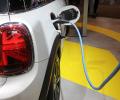
Electric vehicle retail sales in the country witnessed over three-fold jump last fiscal with two-wheeler offtake leading the segment, according to data compiled by automobile dealers' body FADA. Total electric vehicle (EV) retails reached 4,29,217 units in 2021-22, a rise of three-fold from 1,34,821 units in the financial year 2020-21, the industry body said. Total EV sales had stood at 1,68,300 units in the 2019-20 fiscal, it noted.
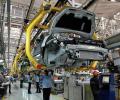
Automobile manufacturers are likely to report strong numbers for the September quarter of Financial Year 2023-24 (Q2 FY24), riding on growth across segments and offset by a marginal drop in overall two-wheeler (2W) volumes. Higher average selling price (ASP) year-on-year (YoY), which was necessitated by price hikes taken by original equipment manufacturers (OEMs), and an improved product mix will also aid revenues and margins. Moreover, commodity prices are down on a YoY basis, leading to higher margins in earnings before interest, taxes, depreciation and amortisation (Ebitda).

Tata Steel and Indian Hotels on Wednesday said they have always made all relevant disclosures and have no further comments to offer following comments made by ousted Tata Group chairman Cyrus Mistry that Tata group firms could face a potential USD 18 billion writedown.

Consumer sentiments have been dampened due to several factors like tight liquidity, high insurance, and high costs
Last month, nine leading vehicle manufacturers sold 213,633 units, 25.8 per cent more than last year.

'We are seeing one of the highest discounts in recent years across companies.' 'October is a crucial month with several festivals coming up.'

India's flagship motor show Auto Expo 2023 kicked off on Wednesday with the global unveiling of Suzuki Motor Corporation's concept electric SUV 'eVX' which is slated to hit the market by 2025. The company's Indian arm Maruti Suzuki India is among the major manufacturers participating in the show that has returned after three years. The Concept eVX is a mid-size electric SUV concept designed and developed by Suzuki Motor Corporation (SMC), Japan. It will be powered by a 60 kWh battery pack offering up to 550 km of driving range on single charge.

Tata Motors, Ford, Nissan, Maruti Suzuki, Toyota Kirloskar, BMW, Renault and Isuzu have also announced price hike from next month citing impact of increase in commodity prices and foreign exchange rates.
Leading automakers Maruti Suzuki India, Hyundai and Tata Motors reported a double-digit increase in dispatches to dealers in April as the demand remained robust especially for the sports utility vehicles. The country's largest car maker Maruti Suzuki India (MSI) said its domestic passenger vehicle wholesales rose 13 per cent to 137,320 units last month as against 121,995 units in April 2022. Sales of mini cars, comprising Alto and S-Presso, fell 18 per cent to 14,110 units as compared with 17,137 units a year ago.

As much as 35 per cent to 40 per cent of all vehicles sold in the country across segments will be electric by 2030, up from a mere 2 per cent this year, says a Bain & Co report released today. This translates to 14-16 million new electric vehicles (EVs) selling in a year. The inflexion point, which is now being seen month on month in many segments (such as two-wheelers which hit around 4-5 per cent in December), will be more than visible in 2026, when 4-5 million EVs across segments are expected to be sold, accounting for 15-20 per cent of the total sales, says the report.

Automobile exports from India recovered in the first quarter with all vehicle segments, including passenger vehicles and two-wheelers, witnessing growth following an improvement in the pandemic situation across various international markets. As per the latest SIAM data, total vehicle exports during the April-June quarter this fiscal stood at 14,19,430 units as compared with 436,500 units in the same period of 2020-21 which saw massive disruptions due to the COVID lockdowns across the country, hampering sales as well overseas shipments. SIAM director general Rajesh Menon told PTI that while two-wheeler shipments were better than previous three years, passenger vehicles, three-wheelers and commercial vehicles export numbers were yet to catch up with numbers in the first quarter of 2018-19 fiscal.

Auto majors report positive sales figs for November.

Auto manufacturers have focused on launching CNG variants of their popular models to meet consumer demand for vehicles with lower running costs.
Utility segment at present constitutes 17-18 per cent of the total car market in the country.

Auto majors Maruti Suzuki India and Hyundai reported muted sales performance in October as the companies curtailed dispatches to dealers in order to cut inventory build up.

Car sales are experiencing a challenging phase with around Rs 60,000 crore worth of inventory lying unsold with dealers.

'Some buyers get carried away by festival offers and purchase higher variants or larger vehicles than they truly need, which impacts running cost and long-term affordability.'

However, the company has not provided a timeline for the launch of the small electric car.
Tata Motors Ltd, which has just emerged as the number two passenger vehicles company in the country, said on Friday

The company sells various utility vehicles ranging from newly launched compact SUV XUV300 to premium SUV Alturas G4.

Cumulative sales of India's top passenger vehicle makers -- Maruti Suzuki, Mahindra and Mahindra, Tata Motors, Honda Cars, and Toyota Kirloskar -- increased to 206,418 units in February over 200,322 units in the same month last year, an increase of 3 per cent.
Leading carmakers Maruti Suzuki, Hyundai and Tata Motors reported robust dispatches to dealers in May on the back of strong demand for passenger vehicles across regions, even as the global semiconductor shortage continued to impact production. Mahindra & Mahindra, Kia India, Toyota Kirloskar Motor, Honda Cars and Skoda also witnessed strong demand for their models last month. The month of May also witnessed Tata Motors race ahead of Hyundai in terms of domestic wholesales.

Auto industry volumes have grown by 2.5 per cent overall, led by domestic sales of three-wheelers, two-wheelers and passenger vehicles (PVs) in the first quarter of this financial year. Analysts predict an 18 per cent growth in revenues for automotive original equipment manufacturers (OEMs) and profit growth of 69 per cent year-on-year (YoY). However, on a sequential basis, a decline in revenues as well as earnings before interest, taxes, depreciation, and amortisation (Ebitda) margins is expected.

Dealers of Tata Motors in most parts of the country have stopped placing orders for this small car in the last three-four months and the showrooms are displaying contemporary models such as Tiago, Tigor, Hexa and Nexon.

Car sales likely to touch record 3-mn mark by the end of March.
